
Before you register anything
Most guides tell you to register your business first. Do not. Register after you have done at least three events, know what you are offering, and have confirmed that people will pay for it. A CAC registration costs time and money; it does not get you clients, and it does not prove you can plan an event.
What you need before you register: a clear service offering, a pricing structure you have tested, a portfolio of real work, and at least one client who came back or referred someone.
Decide what you are selling
"Event planning" is not one service. It is at least four, and the market pays differently for each:
Full event management. You own the entire event from brief to breakdown. You build the budget, hire every vendor, manage the timeline, and stand on site from setup to teardown. This is the highest-fee service and the highest-risk one — if anything fails, it is your failure.
Day-of coordination. The client has done their own planning; you take over on the day to execute the run sheet. Lower fee, lower risk, and the fastest way to build a reputation because you do more events per month. Read coordination vs full management if you are unsure which to lead with.
Decoration and styling. A separate revenue stream that many planners bundle. If you are good at decor, it can be your primary service, see what event decoration costs in Ibadan for the market context.
Consultation. Selling your knowledge by the hour or by the session. This is viable once you have a track record, not before.
Start with one. Do it well. Add the others when the demand is there, not when you think you should diversify.
Pricing: the part everyone gets wrong
New planners in Nigeria underprice for two reasons: they do not know the market, and they are afraid to lose the enquiry. Both are fixable.
Know your costs first. Before you set a price, list every cost you will incur to deliver the event: transport, phone calls, site visits, vendor coordination time, setup hours, the event day itself, and your post-event admin. If the price you are charging does not cover those costs and leave a margin, you are volunteering, not working.
Quote the value, not the hours. Clients do not buy your time; they buy the outcome. "I will manage your 200-person wedding from brief to breakdown so you can enjoy the day" is worth more than "I will work 40 hours on your event."
Do not quote before the brief. Every event is different. A planner who quotes a flat rate before understanding the scope is either overcharging simple events or undercharging complex ones. Take the brief, build the scope, then quote.
Registration: what you actually need
When you are ready:
- Business name registration with CAC. A business name (sole proprietorship) is sufficient to start. A limited liability company is worth the extra cost only when you are taking on large corporate contracts that require it.
- A dedicated business account. Separate your event money from your personal money from day one. When a client pays a deposit and you spend it on personal expenses, the vendor payment shortfall that follows will end your business faster than any competitor.
- Tax identification. Register with the relevant state tax authority. Compliance is cheaper than the penalty for non-compliance, and corporate clients increasingly require a TIN before signing a contract.
You do not need an office. You need a phone that is always charged, a laptop, reliable internet, and a workspace where you can take video calls without background noise.
Getting your first five clients
Your first clients will come from your personal network. They will not come from Instagram ads, a website, or a Google listing — those channels work later, when you have a portfolio to show.
- Tell everyone you know. Not with a broadcast message; with a conversation. "I have started planning events — if you hear of anyone looking for a planner, I would appreciate the referral."
- Do two events at cost. Choose people who will let you photograph everything and who will write a genuine testimonial. These are your portfolio anchors.
- Assist established planners. Offer to work as a coordinator or decorator's assistant. You learn the workflow, you build relationships with vendors, and the planner may refer small events to you.
- Be visibly competent on social media. Post your real work — setup process, finished rooms, client testimonials. Do not post motivational quotes about hustle. Post evidence that you can do the job.
- Follow up. Every enquiry that does not convert today is a potential client in three months. Keep a list. Check in. Be helpful without being pushy.
Cash flow: the thing that kills businesses
Event planning has a cash flow problem built into its structure: you collect deposits, spend them on vendor payments, and collect the balance after the event — sometimes weeks after. If you are running two events simultaneously, the deposit from Event B is sitting in your account while Event A's vendors are waiting to be paid.
Do not spend Event B's deposit on Event A's vendors. That is the shortest path to a crisis. Keep a spreadsheet. Know exactly what money belongs to which event. Pay vendors from the client's funds, not from your own operating balance.
If you cannot afford to float the gap between vendor payments and client balance collection, your pricing is too low or your payment terms are wrong. Fix the terms: collect more upfront, or collect the balance before the event day rather than after.
Building the business beyond the first year
After your first year, three things determine whether you grow:
Referrals. Every satisfied client is a channel. Ask for the referral explicitly — "If you know anyone planning an event, I would love an introduction." Most clients are happy to refer; they just do not think of it unless you ask.
Repeat clients. Corporate clients who run quarterly events are more valuable than wedding clients who book once. If you have done one corporate event well, pitch the retainer.
Your vendor network. The quality of your vendors determines the quality of your events. Build relationships with two or three reliable vendors in each category — caterers, decorators, photographers, venues — and protect those relationships. A vendor who trusts you will prioritise your events, extend credit when you need it, and tell you honestly when something is not possible.
Training: where it fits
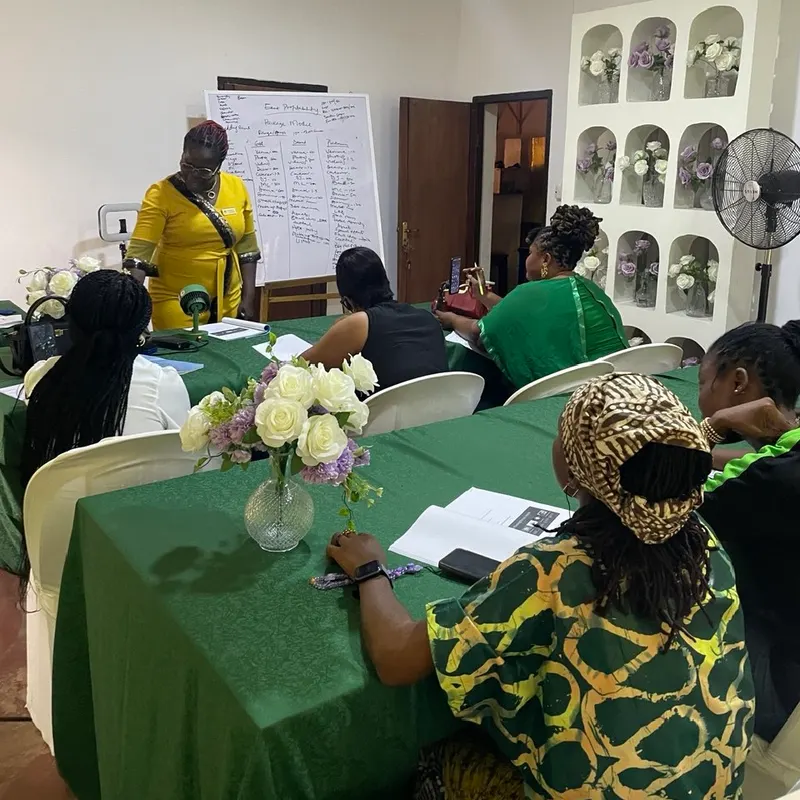
If you are starting from zero, a structured programme compresses the learning curve. The Pleasant Jay Academy covers the planning process, decor skills, pricing and the business side over four weeks — the parts of this article that take a year to learn on your own, taught by people who are actively running an event business.
If you have been assisting for a year and already have the practical skills, training is less critical — but the pricing and business modules are usually where self-taught planners have the biggest gaps.
Ready to plan your next event?
If you are already planning events and want to work with an established team, tell us about yourself. If you are still building your skills, see what the Academy covers.