
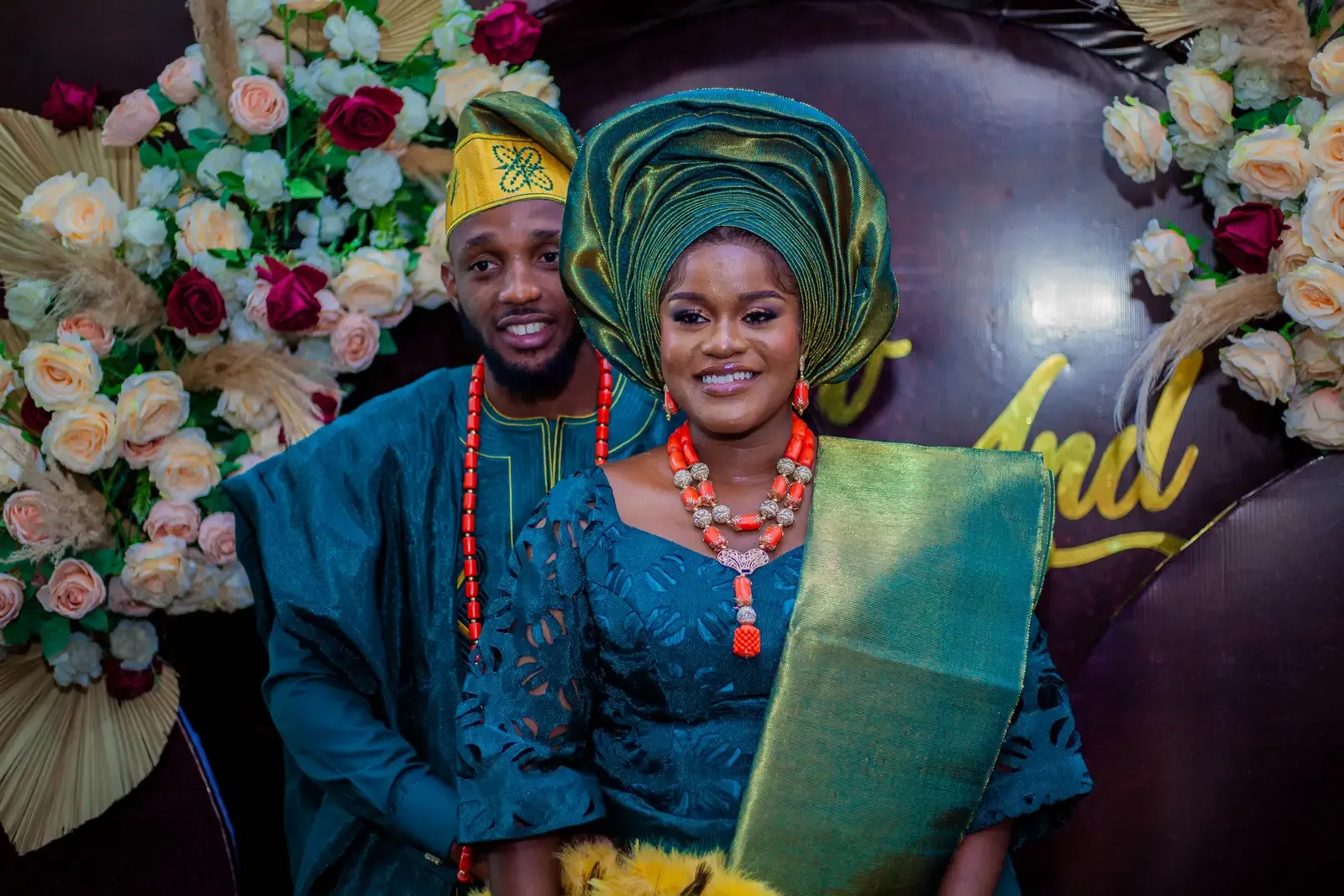
Why the traditional wedding is the harder event to plan
Most couples assume the white wedding is the complex one. It is not. The traditional wedding involves more stakeholders, more cultural protocols, more logistics and — almost always — a tighter budget, because the family expects it to come first and the couple has already spent on the engagement list.
If you are planning a traditional wedding in Ibadan, the single most useful thing you can do is make decisions in the right order. Everything downstream gets easier or harder depending on what you settle first.
The engagement list comes before the venue
The engagement list — what the groom's family presents to the bride's — is culturally non-negotiable in Yoruba weddings. Its contents and cost vary by family, but it sets the financial baseline for everything else. Until the list is settled, you do not know what budget remains for the ceremony itself.
Couples who pick a venue before agreeing the list often find themselves scaling back the reception to cover items they did not anticipate. Settle the list first. Then budget the event.
Venue realities in Ibadan
Traditional weddings in Ibadan run larger than most couples plan for. The bride's family invites. The groom's family invites. Extended family invites themselves. A guest list of 200 becomes 350 on the day, reliably.
Your venue needs to absorb that overshoot without collapsing. An outdoor space with flexible seating — canopies, not fixed chairs — handles overflow better than an indoor hall at maximum capacity. Ask your event planner about venues that scale, and budget the canopy and chair hire for the realistic number, not the hopeful one.
If you are considering an outdoor venue in Ibadan, power and shade are the two constraints that matter most — especially for events between January and April.
Asoebi: the coordination problem
Asoebi is simultaneously a revenue line, a branding decision and a logistics nightmare. The fabric has to be chosen, priced, distributed, and then 150 people have to get it sewn in time — by tailors who are also sewing for three other weddings that month.
Start the asoebi process at least eight weeks before the ceremony. Choose a fabric that photographs well under both natural and artificial light — your event decorator can advise on how the asoebi colour interacts with the venue styling so the room does not clash.
The most common asoebi failure is not the fabric. It is distribution. People collect late, take it to the tailor late, and arrive in civilian clothes. Set a hard collection deadline and follow up.
The day-of timeline nobody writes down
A traditional wedding has a cultural sequence: arrival of the groom's family, prostration, introduction, presentation of the engagement list, prayers, then the celebration. That sequence is fixed, but the transitions between stages are not — and that is where events run two hours over.
Write the timeline down. Not in your head, on paper, with the MC and both family representatives. Assign someone — ideally your event coordinator — to keep the sequence moving. The most common stall is the gap between the formal ceremony and the reception, when everyone is milling and nobody has said "please be seated."
Decor that respects the culture
Traditional wedding decor in Ibadan is not the same as white wedding decor with different colours. The staging serves the cultural programme: a decorated mat or platform for the prostration, a clear line of sight between the families, and space for the MC to work.
Over-decorating the stage with florals and draping can physically obstruct the ceremony — the groom's family cannot prostrate properly if the stage is cluttered. Styling for a traditional wedding means understanding what the ceremony needs before you start designing what it looks like.
The colour palette matters more than the arrangement. The asoebi colour, the family's preferred tones, and the venue's own fixtures all have to work together. If the asoebi is emerald green and the venue chairs are royal blue, the room will fight itself no matter how much you spend on flowers. Decide the palette first — fabric, then decor, then lighting — and let the decorator work within it rather than against it.
Photography and videography
Traditional weddings produce the most emotionally charged moments in the entire Nigerian event calendar — the prostration, the prayer, the moment the bride is unveiled, the first dance — and they happen fast. If the photographer is not positioned correctly, they are gone.
Brief your photographer on the cultural sequence. The prostration happens once. The presentation of the list happens once. There is no "can we do that again" at a traditional wedding. A photographer who has not covered Yoruba ceremonies before needs to shadow one before yours, or at minimum receive a detailed shot list keyed to the programme.
Video is increasingly expected. The family in London, the uncle in Houston, the grandmother who could not travel — they will watch the video repeatedly. Budget for it if you can; if you cannot, at least have someone with a steady hand and a charged phone capturing the key moments.
Catering and the second-day question
Feeding 350 people in Ibadan is straightforward if you plan for 350. The problem is planning for 200 and hoping. Get the caterer's per-head rate, multiply by 350, and if the number is too high, adjust the menu rather than the headcount. A simpler menu for the real crowd is better than an ambitious one that runs out.
Some families hold a second-day celebration. If yours does, budget it now — not as an afterthought after the main event has consumed everything.
When to bring in help
If both families are local, experienced and aligned, you may be able to coordinate a traditional wedding without a planner. If the families are in different cities, if the guest list is above 250, or if you are working and cannot take two weeks off to manage vendors — a planner pays for itself in time saved and mistakes avoided.
The planner's value in a traditional wedding is not creativity. It is diplomacy — managing two families' expectations while keeping the logistics on schedule.
Ready to plan your next event?
Tell us about your traditional wedding — timeline, guest count, what you have settled and what is still open. Start the conversation on WhatsApp or fill in our brief.